
House Leveling in Garland, TX
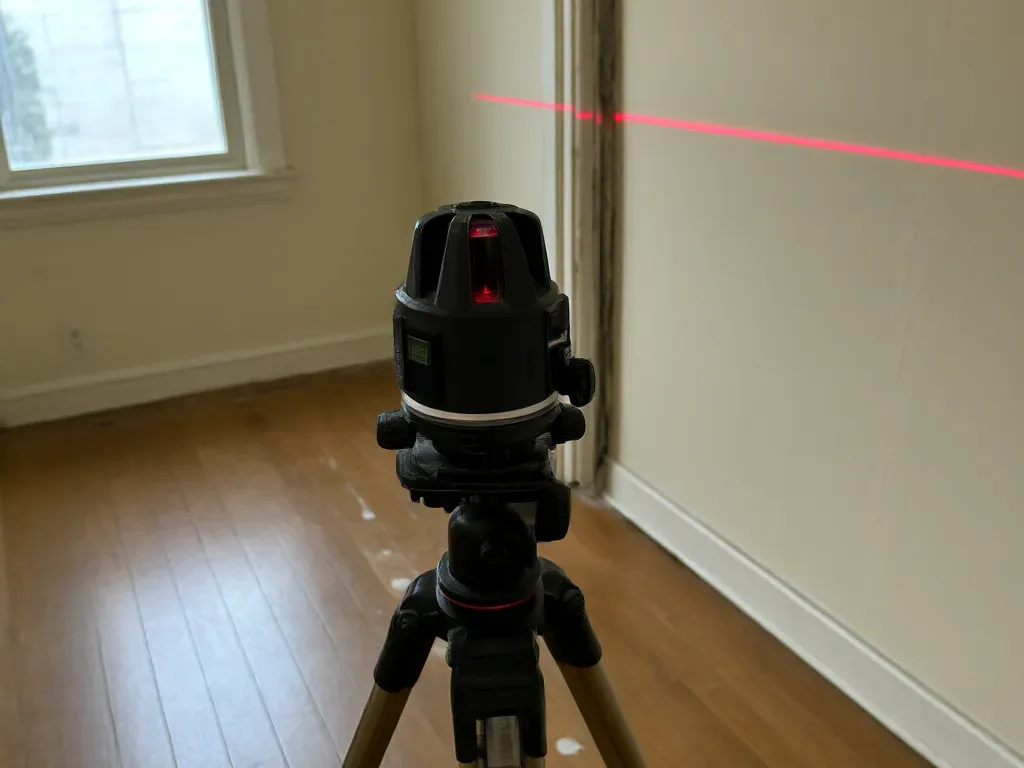
Garland Superior Foundation Repair offers professional house leveling in Garland, TX, with 22 years of lifting slab and pier and beam homes and 4,100+ foundations repaired. We level sloping floors, re-level houses with failed older repairs and set floors right before a remodel, using a digital manometer, hydraulic jacks, pressed concrete pilings and steel shims. Most house leveling jobs take 1 to 3 days.
Leveling a house isn't the same as forcing it flat. A house that's been out of level for decades has drywall, brick and door frames that settled into that shape, and lifting the last quarter inch can crack more than it fixes. We lift in small, measured steps and stop when the readings stop improving.
Get a FREE Estimate
Or call (972) 885-6239
House Leveling Services
The house type and its history decide how we lift it. These are the five leveling jobs we see most.
Slab House Leveling
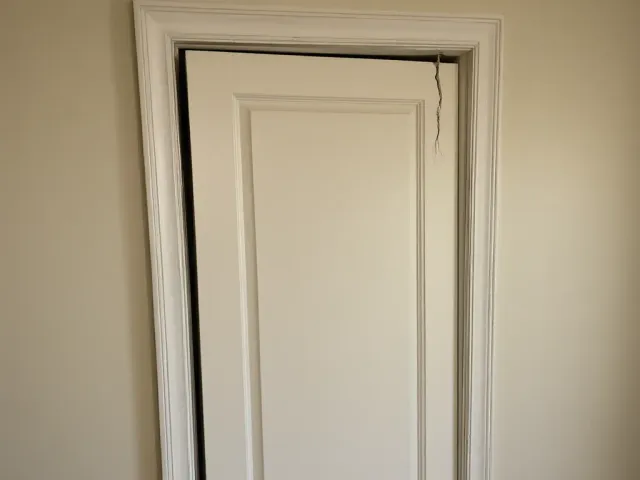
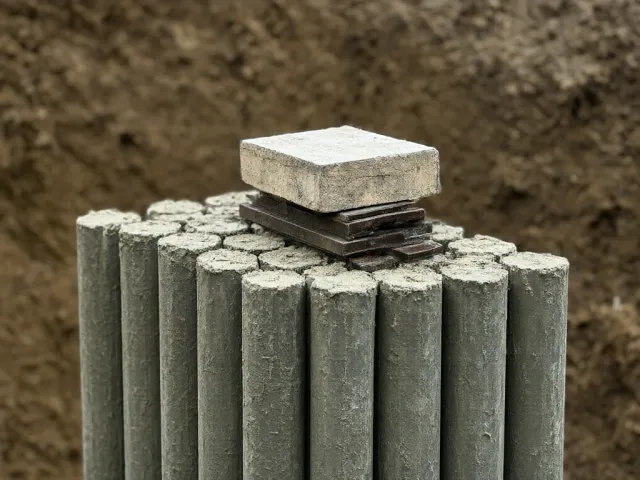
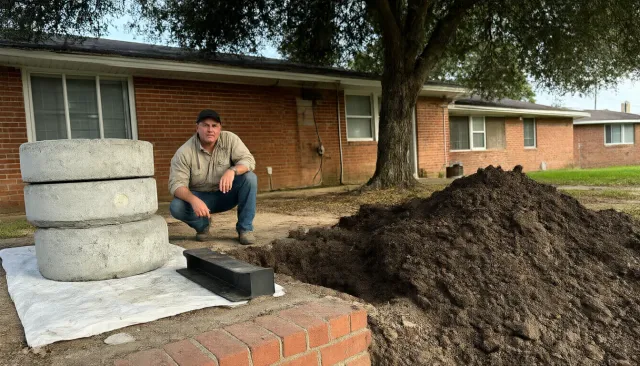
Hydraulic jacks set on pressed concrete pilings along the grade beam raise the low side of the slab while the manometer runs. We lift the lowest point first, bring the neighboring pilings up in sequence and shim each one with steel at its final height.
Pier and Beam House Leveling
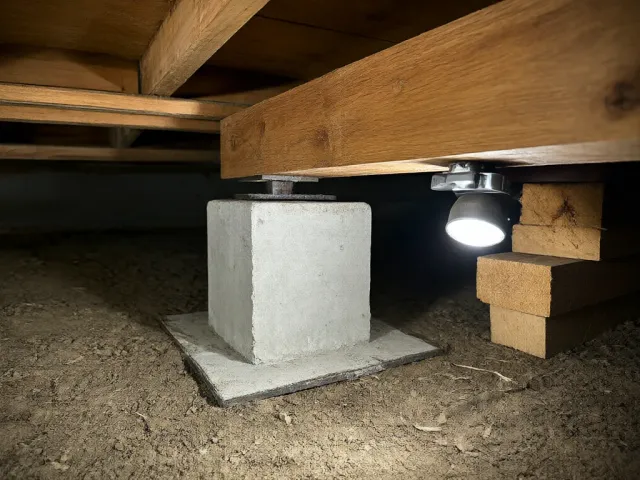
We jack girders off their piers, replace crushed or rotted shims with steel, and add support piers where spans are too long. Pier and beam houses usually level in a day, and the shim work carries 2 years of free re-shim adjustments.
House Re-Leveling on Existing Piers
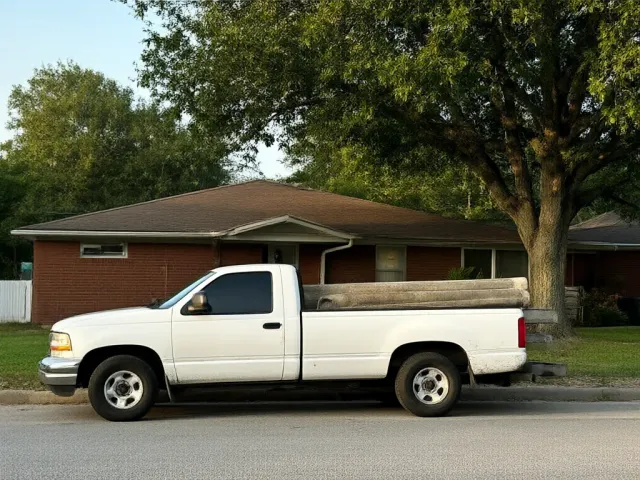
Older repairs often fail at the top, not the bottom: wood shims that rotted or crushed, or pilings spaced too far apart. We open a few old piers, re-shim the good ones with steel and add pilings between them where the spacing was too wide.
House Leveling Before a Remodel
New tile, hardwood and stone countertops don't forgive a sloping floor. If you're remodeling an older house, we read the floors first and level the house before the flooring and cabinet crews show up, so the new work isn't cracked by next summer.
Room Addition Leveling
A den or bedroom added in the 1970s or 1980s often sits on its own shallower foundation and drops away from the original house. You'll see a crack where the addition meets the old wall. We pier the addition side and lift it back to meet the main house.
What Level Really Means for an Older House
No house is dead level, including new ones. What we measure is relative elevation: every reading compared with one reference point, drawn on a floor map. The pattern matters more than any single number. A low corner tells one story, a hump in the middle tells another.
The engineer looks at how much the floor drops across a given distance and compares it with what the structure can tolerate. Our job is to bring the house back inside that range and keep it there. Chasing a perfect zero on an older house usually means cracking drywall and brick that had settled into place.
What You'll Notice After House Leveling
Doors are usually the first good sign. A bedroom door that hasn't latched in years often closes on the first try once the lift is done. Gaps at the tops of door frames narrow, and cabinet doors that swung open on their own stay put.
Not every crack closes. Some drywall cracks get narrower, some don't change, and a few open up slightly as the house moves back. Brick stair-step cracks often tighten but rarely disappear. Wait a few weeks after the lift before patching drywall or tuckpointing brick, so you're fixing cracks once.
Plumbing is the other thing to watch. A licensed plumber static tests the drains before we backfill, so any pipe the lift stressed shows up while the hole is still open.
When a House Doesn't Need Leveling
A small slope in a pier and beam house that's been stable for years, a door that sticks only in August, or a hairline crack in a newer slab doesn't automatically mean a lift. If the readings are inside the engineer's range, we'll say so and leave you a floor map to compare against next year.
In a dry summer, try a soaker hose 12 to 18 inches from the slab first. Mark each end of the crack in pencil, with the date. If the crack keeps growing or the door gets worse after the rain comes back, call us for a second set of readings.
Our House Leveling Process
Baseline readings
We take manometer readings every 8 to 10 feet in every room and mark doors, cracks and gaps on the floor map so we can compare later.
Lift plan
The engineer and our crew lead set the lift order and target heights for each support, starting with the lowest point.
Staged lift
We raise in small steps, reading the manometer and checking doors, brick and drywall between each one, and stop when readings stop improving.
Shim and test
Each support gets steel shims at its final height, and a licensed plumber static tests the drains before we backfill or close the crawl space.
Final map and re-check
You get a before-and-after floor map, the warranty paperwork and a free set of readings at 12 months to confirm the house stayed put.
House Leveling Questions
How level will my house be after leveling?
Back inside the range the engineer considers acceptable for your house, with doors working again. We don't promise dead level on an older house, because forcing it there usually cracks more than it fixes.
Should I fix drywall cracks before or after house leveling?
After. Give the house a few weeks once the lift is done. Some cracks will close, a few may open slightly, and you'll only want to patch and paint once.
How much does house leveling cost in Garland?
Pier and beam re-shim and level runs $1,400 to $4,200. Slab leveling depends on piling count, and a typical single-story slab job runs $4,800 to $9,200. The free inspection gives you a written number.
Can you level a house that already has piers?
Usually, yes. We open a few of the old piers, check the shims and the spacing, and re-shim with steel or add pilings between them. Starting over is rarely necessary.
Can I stay home while you level the house?
Yes. You'll hear the jacks and see the crew around the outside, and water will be off briefly during the static test. Most leveling jobs are done in 1 to 3 days.
See Where Your Floors Stand
Call (972) 885-6239 for a free set of floor readings. We'll show you how far out the house is, what it would take to level it and whether it needs leveling at all.