
Foundation Drainage and Water Management in Garland, TX
Garland Superior Foundation Repair offers professional foundation drainage and water management in Garland, TX, from French drains and surface drains to regrading, downspout extensions and soil watering plans. After 22 years of foundation work, we know a lot of slab movement starts with a downspout dumping at a corner or soil that falls toward the house. Our grading target is soil that drops at least 6 inches in the first 10 feet away from the slab.
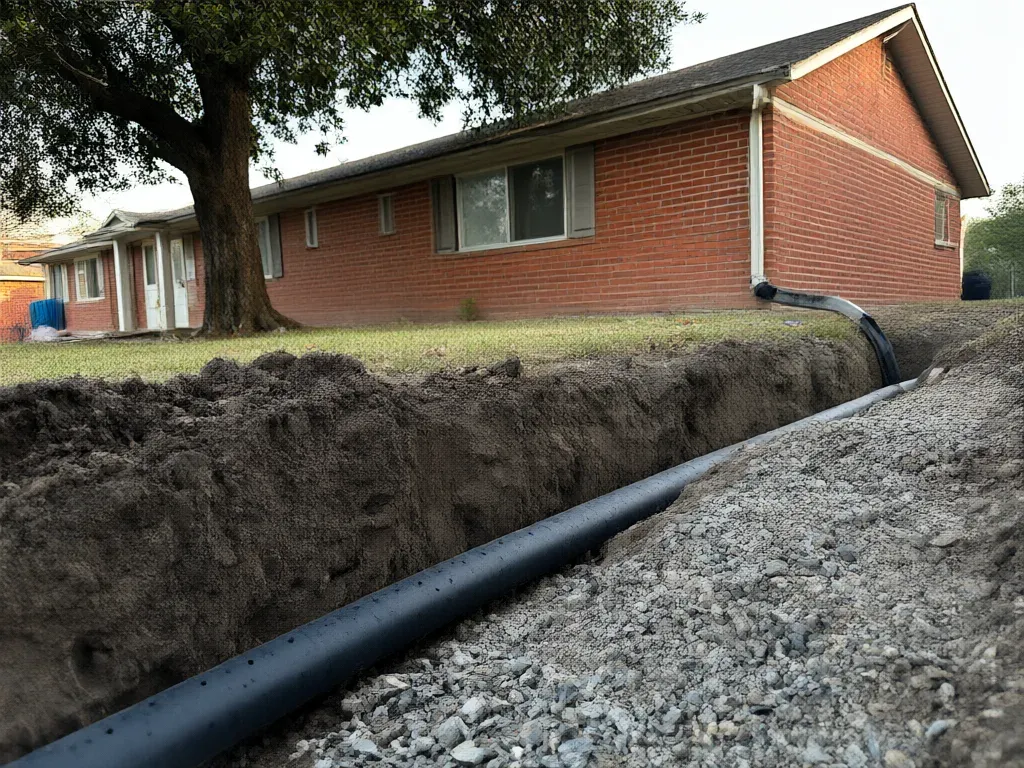
Drainage keeps piers from being the only fix. We install 4-inch perforated French drains in washed gravel and filter fabric, solid-pipe downspout runs with pop-up emitters, channel drains across patios and grade corrections along the beam. French drains run $38 to $62 per linear foot, and drainage work carries a 5-year workmanship warranty.
Get a FREE Estimate
Or call (972) 885-6239
Foundation Drainage Systems We Install
The right system depends on where the water comes from: your roof, your neighbor's yard, or soil that slopes the wrong way.
French Drains for Foundation Drainage
A trench 12 to 24 inches deep, lined with filter fabric, filled with washed 3/4-inch gravel around 4-inch perforated pipe in a sock. It catches water moving across the yard toward the slab and carries it to daylight or a pop-up emitter. French drains run $38 to $62 per linear foot.
Surface Drains and Channel Drains
Grated catch basins in low spots and channel drains along patio and driveway edges pick up water that sheets off concrete and pools against the beam. They tie into solid pipe that runs out to a safe discharge point.
Downspout Extensions and Gutter Tie-Ins
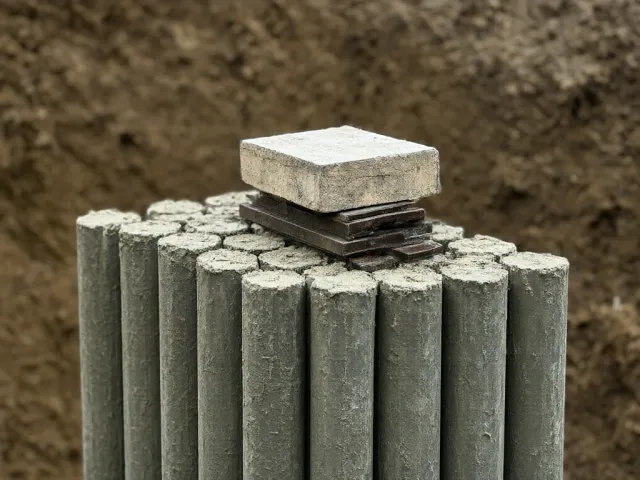
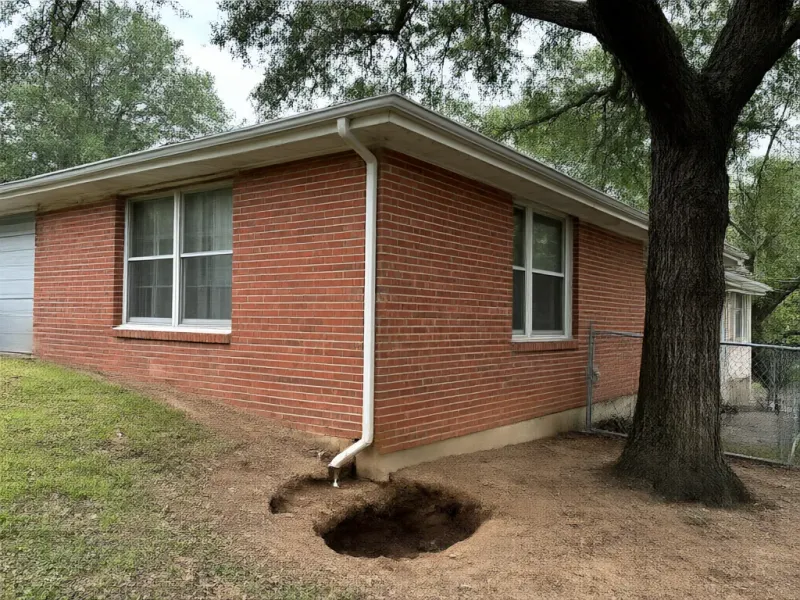
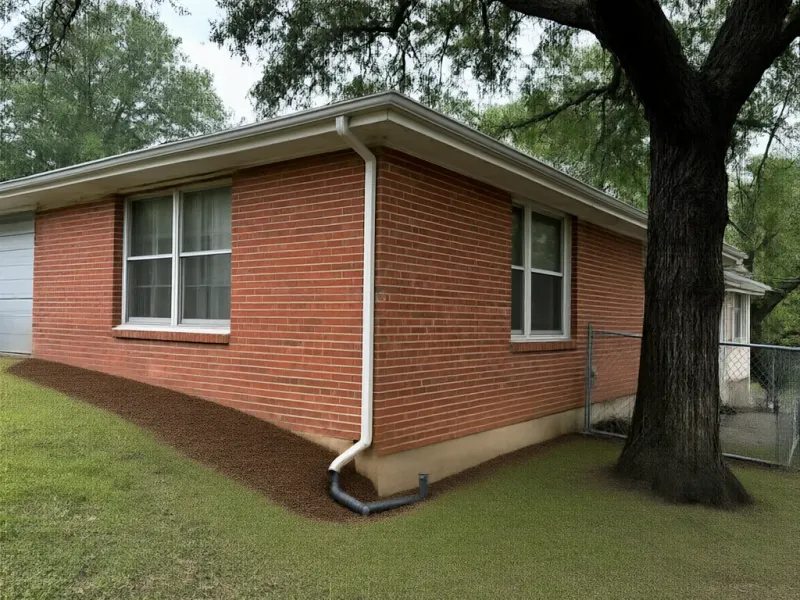
A downspout that drops at the corner puts a roof's worth of water right at the grade beam. We connect downspouts to buried solid 4-inch pipe and let it out at least 5 feet from the foundation, at $18 to $30 per linear foot.
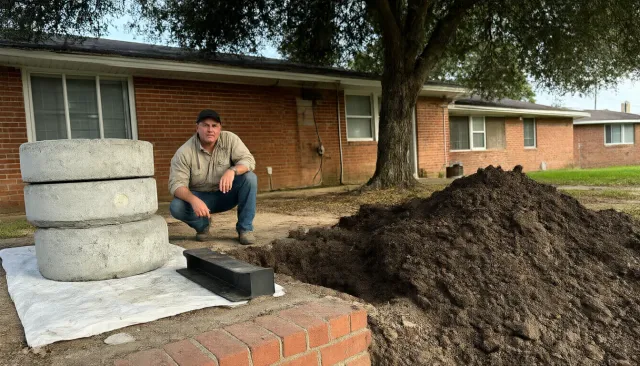
Foundation Regrading and Bed Correction
Years of mulch, soil and landscape edging build up against the brick until the beds slope toward the house and dam water at the slab. We pull the soil back, reshape the grade away from the beam and reset bed edging so it doesn't trap water.
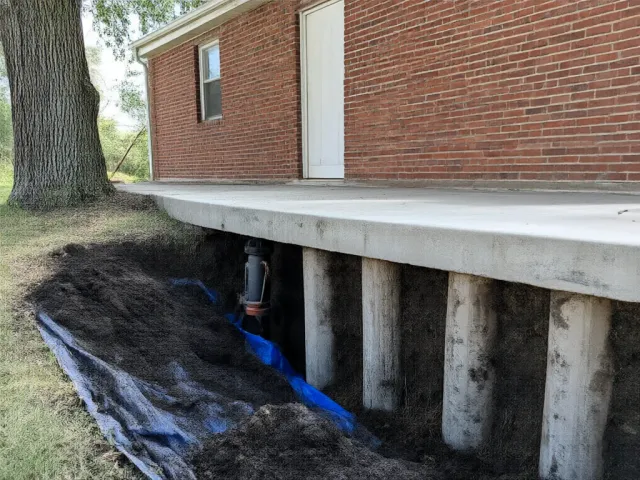
Soil Watering Systems for Clay Foundations
In a dry summer the clay along the slab edge shrinks while the soil under the house stays damp. A soaker hose or drip line 12 to 18 inches out from the slab, run on a timer, keeps the edge from drying out and dropping.
Before and After
Signs Water Is Moving Your Foundation
Walk the house during a hard rain or right after one. Water standing against the slab for more than a few hours, mulch washed out from a bed, a gully under a downspout or soil splashed up onto the brick all tell you where water is going. Inside, a damp smell from a crawl space or a corner of the slab that's darker than the rest are worth noting.
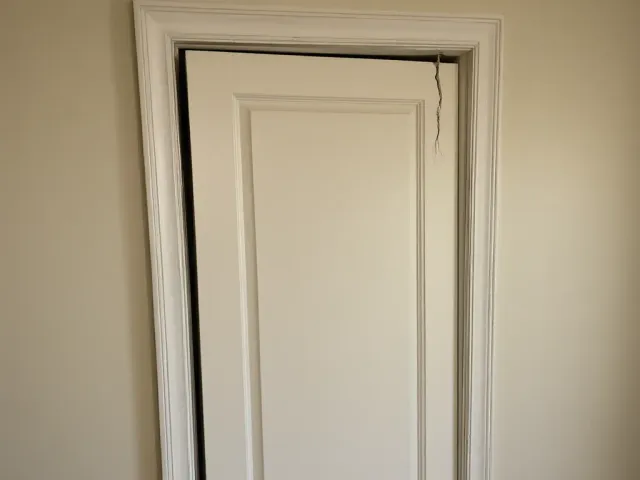
Movement patterns help too. A corner that heaves after a wet spring, a door that sticks after rain instead of in August, or a crack that opens on the side of the house where the downspouts drain all point to water rather than drought.
Wet Clay and Dry Clay Both Move a Slab
Blackland Prairie clay doesn't care which direction the moisture goes. Too much water and it swells, lifting part of the slab. Too little and it shrinks, letting the edge drop. A house moves most when one side is soaked and another side is dry, so the goal of drainage isn't to dry everything out. It's to keep moisture even all the way around.
That's why we look for small sources too. An air conditioner condensate line dripping at the slab edge all summer, a sprinkler head spraying the brick, or a flower bed watered daily on one side of the house can do as much damage as a bad downspout. Moving one of those is sometimes the cheapest foundation fix there is.
Watering Your Foundation in a Drought
Set a soaker hose 12 to 18 inches out from the slab, not pressed against the brick, and run it on a schedule through the dry months. The idea is steady moisture, not a flood once a week. Stop when the soil is damp a few inches down, and skip it after a good rain.
Drainage Before Piers, or Alongside Them
Sometimes drainage is the whole job. If the elevation map shows only minor movement and the cause is plainly water, we fix the water, set up a watering plan and come back to read the floors later. Plenty of houses never need piers after that.
When the slab has already dropped past normal range, piers come first and drainage follows, so the drain lines aren't torn up by pier access holes. We plan both together and price them on the same written scope.
Our Foundation Drainage Process
Trace the water
We run a hose test where needed, shoot grades around the house and mark where water pools, where downspouts drop and where the yard slopes in.
Lay out and locate
We draw the drain route and outlets, then call 811 at least two business days before digging. Sprinkler lines we find and flag ourselves.
Dig and install
Trenches get filter fabric, washed gravel and pipe set to fall toward the outlet. Most drainage jobs take 1 to 2 days.
Backfill and regrade
We backfill, reshape the soil so it falls at least 6 inches in the first 10 feet and reset bed edging and sod we moved.
Water test and watering plan
We run water through the system to confirm it drains, then hand you a watering plan for the dry months and the 5-year warranty.
Foundation Drainage Questions
Do I really need gutters on a house in Garland?
On any side where the roof drains toward the slab, gutters with downspouts run to buried pipe help a lot. Without them, a roof sheds its water in a line right along the grade beam every time it rains.
Will a French drain dry out the soil under my house?
No. A French drain carries away water that's moving across the surface and just below it, the water that would otherwise pool at the slab. Pair it with a watering plan in dry months and the moisture stays even.
Can you run my drains out to the street?
Sometimes. Cutting a curb usually needs the city's approval, and not every city allows it. Where a curb outlet isn't an option, we discharge to daylight on a slope or to a pop-up emitter in the yard.
Does fixing drainage replace foundation repair?
It can when movement is still minor. If the floors are already out past normal range, drainage keeps the repair from coming back but won't lift the house. The elevation map tells us which case you're in.
How long does a drainage job take?
Most French drain and downspout jobs take 1 to 2 days. We call 811 first, so plan on at least two business days between signing and digging.
Find Out Where Your Water Is Going
Call (972) 885-6239 for a free drainage and foundation inspection. We'll walk your lot, check your floor elevations with a manometer, and show you exactly where the water hits your slab.