
Concrete Leveling and Slab Jacking in Garland, TX
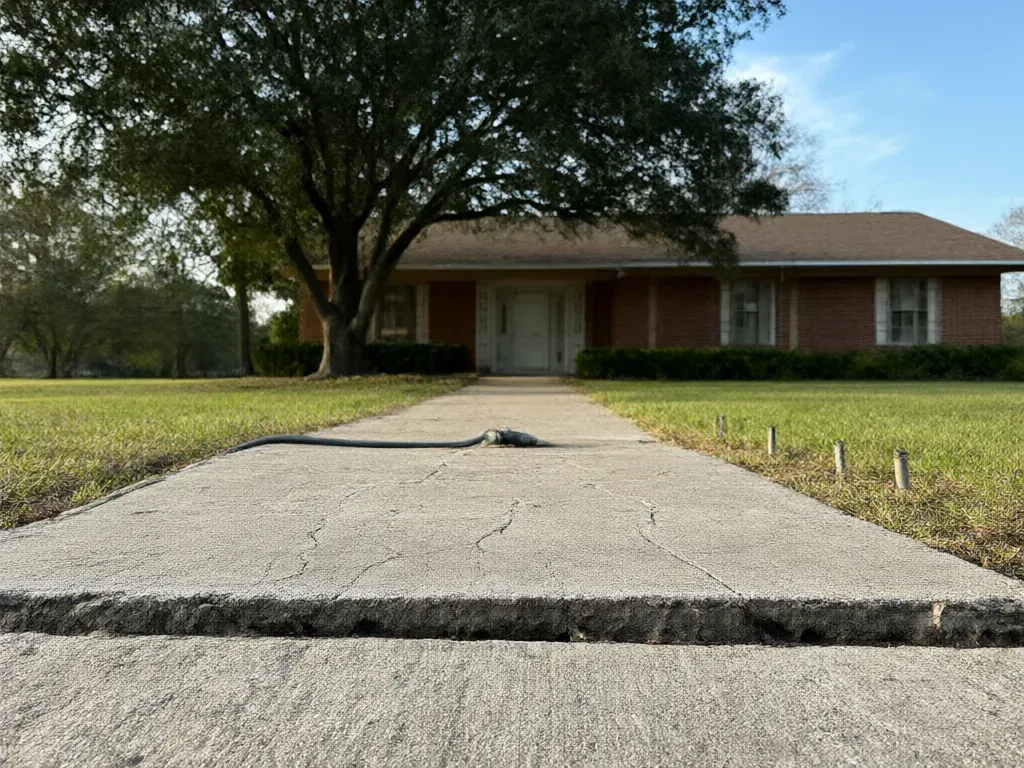
Garland Superior Foundation Repair offers professional concrete leveling and slab jacking in Garland, TX, with 22 years of lifting concrete that has sunk on clay. We raise sunken driveway panels, garage aprons, patios, sidewalks, pool decks and porch steps with mudjacking or polyurethane foam injection, then seal the joints so water doesn't wash out the base again. Mudjacking runs $4 to $7 per square foot and polyurethane foam $7 to $12.
Slab jacking costs a fraction of tearing out and repouring a panel, and you can drive on a foam-lifted panel in about 15 minutes. One rule we don't bend: we don't mudjack under a house. Concrete leveling is for flatwork. A living-area slab gets pilings.
Get a FREE Estimate
Or call (972) 885-6239
Concrete Leveling Methods and Applications
Two methods, five common jobs. The panel, the load and the budget decide which method we use.
Mudjacking
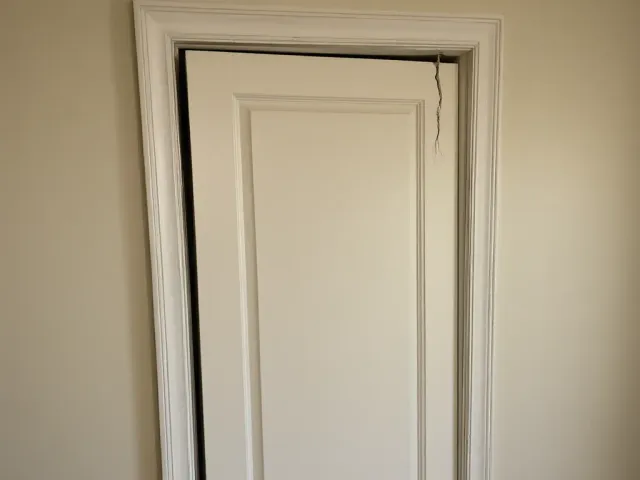
We drill 1-1/2 inch holes through the sunken panel and pump a cement-and-soil slurry underneath until it fills the void and lifts the concrete back into line. It's the lower-cost option, at $4 to $7 per square foot with a $650 minimum, and you can drive on it after 24 hours.
Polyurethane Foam Concrete Leveling
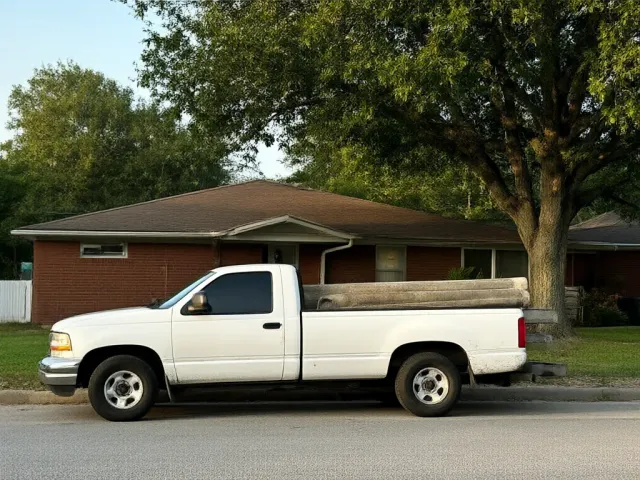
Two-part foam goes in through 5/8 inch holes, expands under the panel and lifts it as it cures. It weighs far less than slurry, so it doesn't add load to soft clay, and the panel is drivable in about 15 minutes. Foam lifting runs $7 to $12 per square foot with a $900 minimum.
Driveway and Garage Apron Leveling
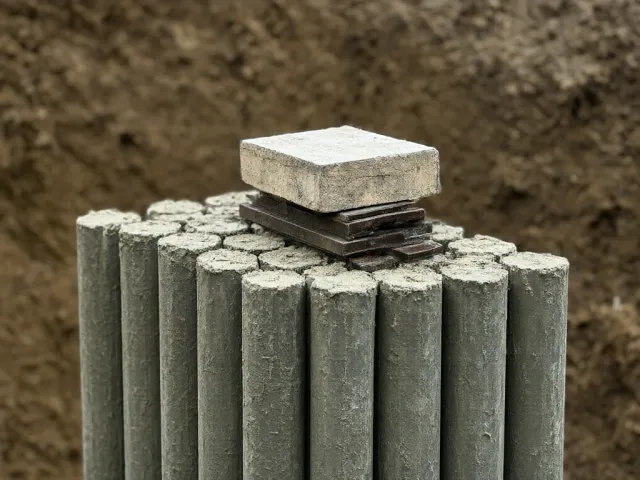
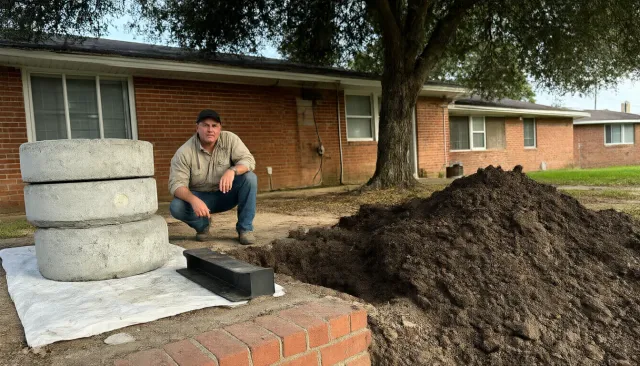
The panel next to the garage slab is the one that sinks most, because roof water and car washing drain right into that joint. We lift it back flush with the garage floor so the step disappears and water runs away from the house again.
Sidewalk and Trip Hazard Leveling
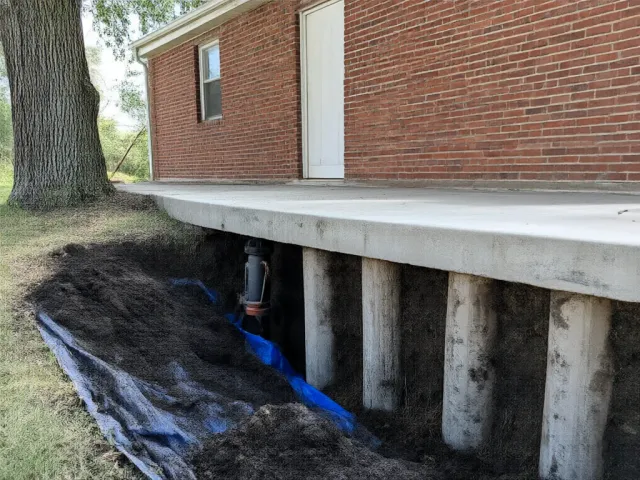
A sidewalk panel that drops an inch at a joint is a trip hazard for anyone walking it at night. Foam lifting brings it back level the same day, and it's a lot less work than breaking out and repouring the section.
Patio and Pool Deck Leveling
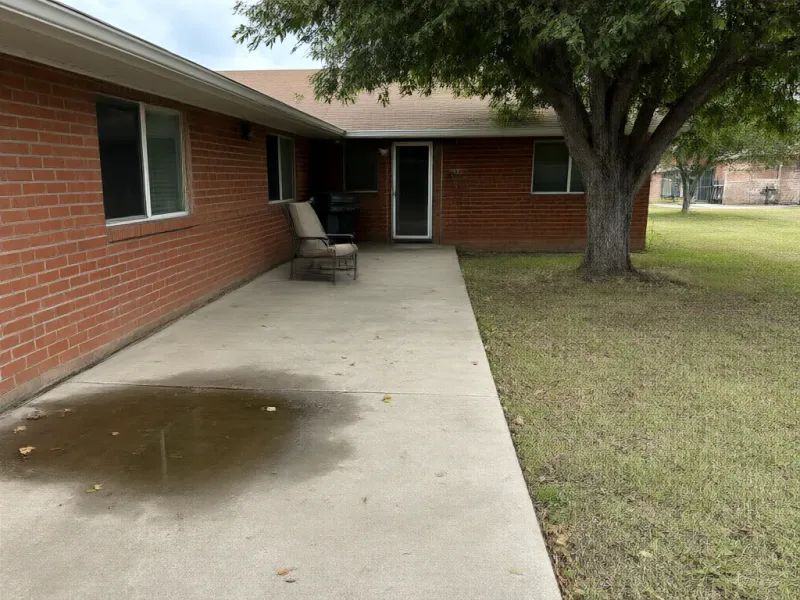
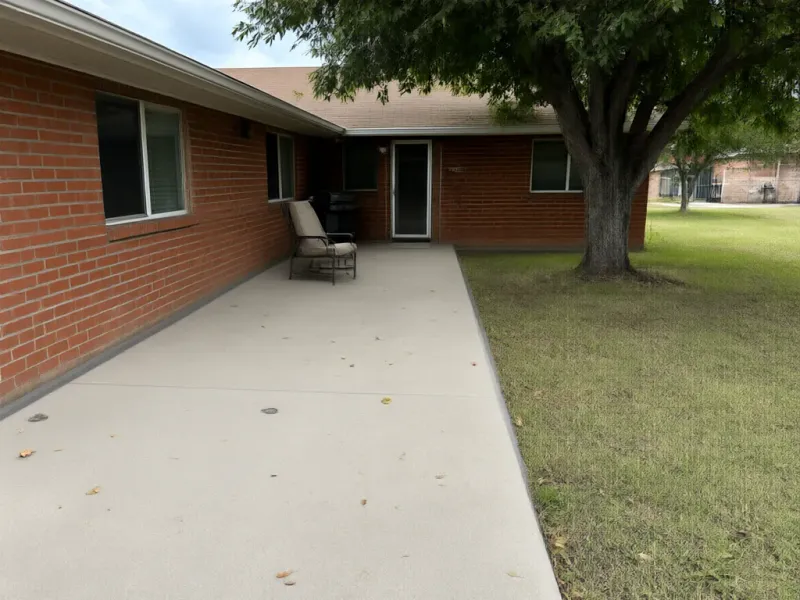
Patios that slope back toward the house send rain straight to the grade beam. Pool decks that drop away from the coping open a gap water can get under. We lift both back to a slope that drains away, and on pool decks we use foam to keep the added weight down.
Before and After
Mudjacking vs Polyurethane Foam
Mudjacking is the older method and the cheaper one. The slurry is heavy, so it can settle along with the clay over time, and the holes are bigger, about 1-1/2 inches each. It's a good value for driveways and walks on firm soil where weight isn't a concern.
Polyurethane foam costs more per square foot but solves more problems. The 5/8 inch holes are easier to hide, the foam doesn't absorb water, it won't wash out, and its light weight puts very little extra load on the soil. Where a panel has sunk because the clay underneath is soft, foam is usually the better long-term buy.
Our usual recommendation: foam for pool decks, garage aprons and anything that has sunk more than once, and mudjacking for a big driveway on solid ground where the budget matters most.
Why Concrete Sinks on Clay Lots
Most sunken flatwork in Garland starts with water at a joint. A downspout empties onto the driveway edge, rain runs along the expansion joint and the base under the slab washes out a little at a time until the panel drops into the hole.
The clay does the rest. Blackland Prairie soil shrinks in a dry summer and pulls away from the underside of the concrete, leaving voids. Driveways poured over poorly compacted fill sink faster, and big tree roots can lift one panel while the next one drops. Patios poured tight against the house often sink along the beam, where the backfill from construction settled.
That's why we seal the joints after every lift with a flexible sealant. Lifting the panel fixes today's problem. Keeping water out of the joint is what keeps it from sinking again.
When Concrete Leveling Won't Work
Slab jacking lifts concrete. It can't lower it, so a panel that's been heaved up by tree roots or swelling clay needs a different fix, usually cutting the roots and replacing the panel. A panel broken into many pieces won't lift as one either, and a surface that's flaking and crumbling is better replaced than raised.
We'll tell you on site if replacement is the better spend. If the panel is sound and just sunk, lifting it almost always wins on cost and time.
We also won't pump either material under the living area of a house. Slurry or foam under a foundation slab can lift it unevenly, fill plumbing trenches and add load to the same clay that's already failing. If the house itself has dropped, it needs pressed pilings or piers, and the free inspection will tell you which.
Concrete Leveling Cost in Garland
Mudjacking runs $4 to $7 per square foot with a $650 minimum. Polyurethane foam runs $7 to $12 per square foot with a $900 minimum. A single sunken driveway panel, about 10 by 12 feet, usually lands between the $650 minimum and $840 for mudjacking, and $840 to $1,440 for foam. Several panels on one visit get priced as one job, so the minimum only applies once.
Joint sealing on the lifted panels is included. Lifted panels carry a 2-year workmanship warranty. If the sunken concrete is part of a bigger drainage problem, we'll price the drainage fix on the same visit so you're not paying to lift the same panel twice.
Lift It Instead of Replacing It
Call (972) 885-6239 for a free look at your driveway, patio or walk. We'll tell you whether it can be lifted, which method fits and what it will cost.